
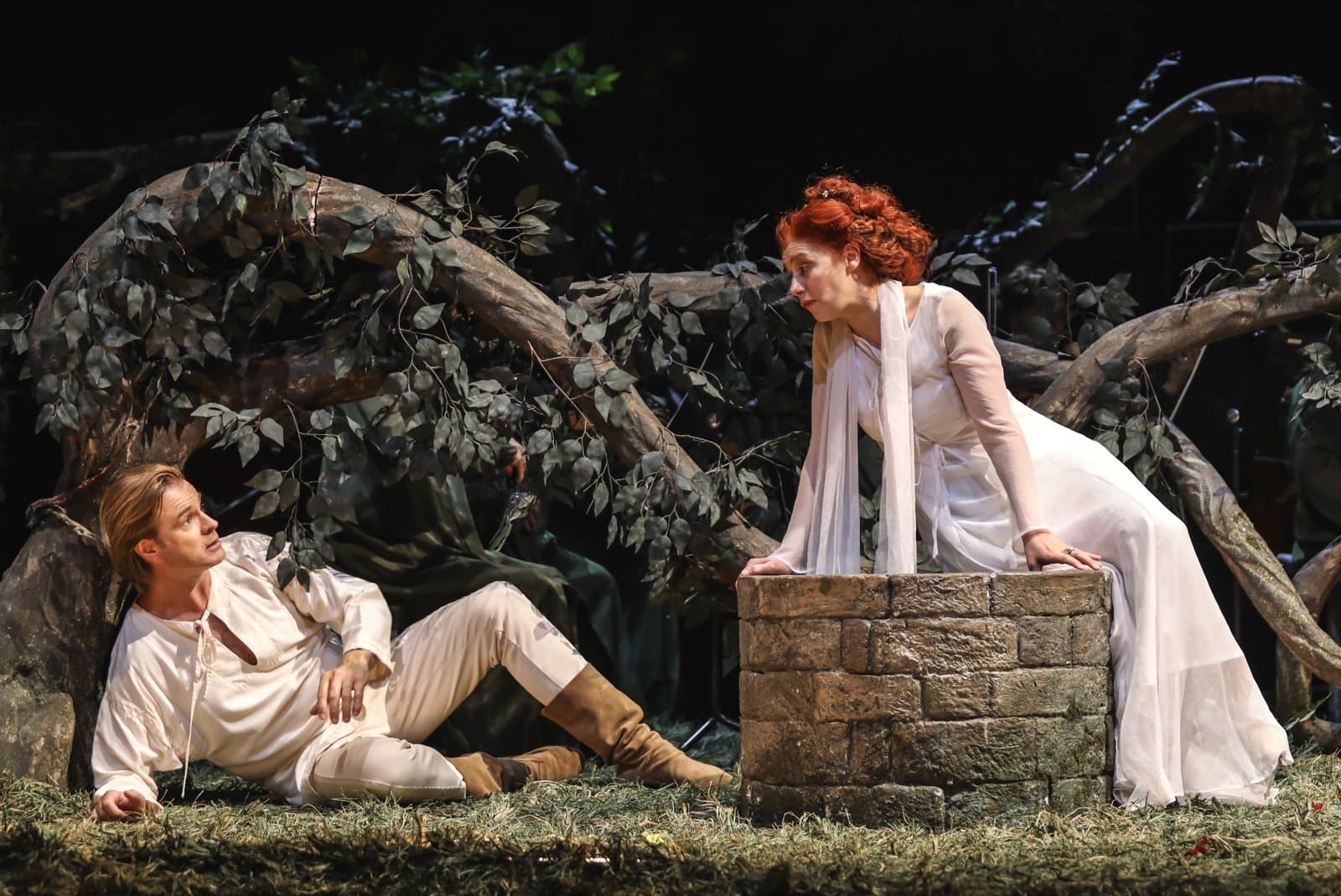
Claude Debussy: Pelléas et Mélisande
In Debussy’s opera, more emphasis is placed on symbols than on plot, and natural speech is more important than melody. The result: deeply human music, surging with individual interpretation.
Debussy wrote in April 1902, “I have long been experimenting with the writing of stage music, but I have imagined it in such an unusual form that after various attempts I have almost given it up”. At the same time, his lyrical drama Pelléas and Mélisande in five acts and thirteen pictures was premiered in Paris. There was a divided audience at the premier. The author of the play on which the script was based, Maurice Maeterlinck, who later won a Nobel Prize, did not even appear at the premiere, whereas, the hired hecklers did. It remains a mystery whether it was the music itself that upset the philosopher-poet, or the fact that his wife did not sing the role of Mélisande, which she had been promised.
Debussy’s work breaks with several French traditions: there is no ballet and no major choral scenes in it. There is, however, a lot of recitativo: singing speech adapted to the French language. Instead of catchy melodies, the vocal parts only move out of their monotonous rhythm when the emotion calls for it. But even at the emotional climaxes, the composer prescribes a pianissimo volume and keeps the orchestra low, creating an intimacy that is quite unusual on the operatic stage.