
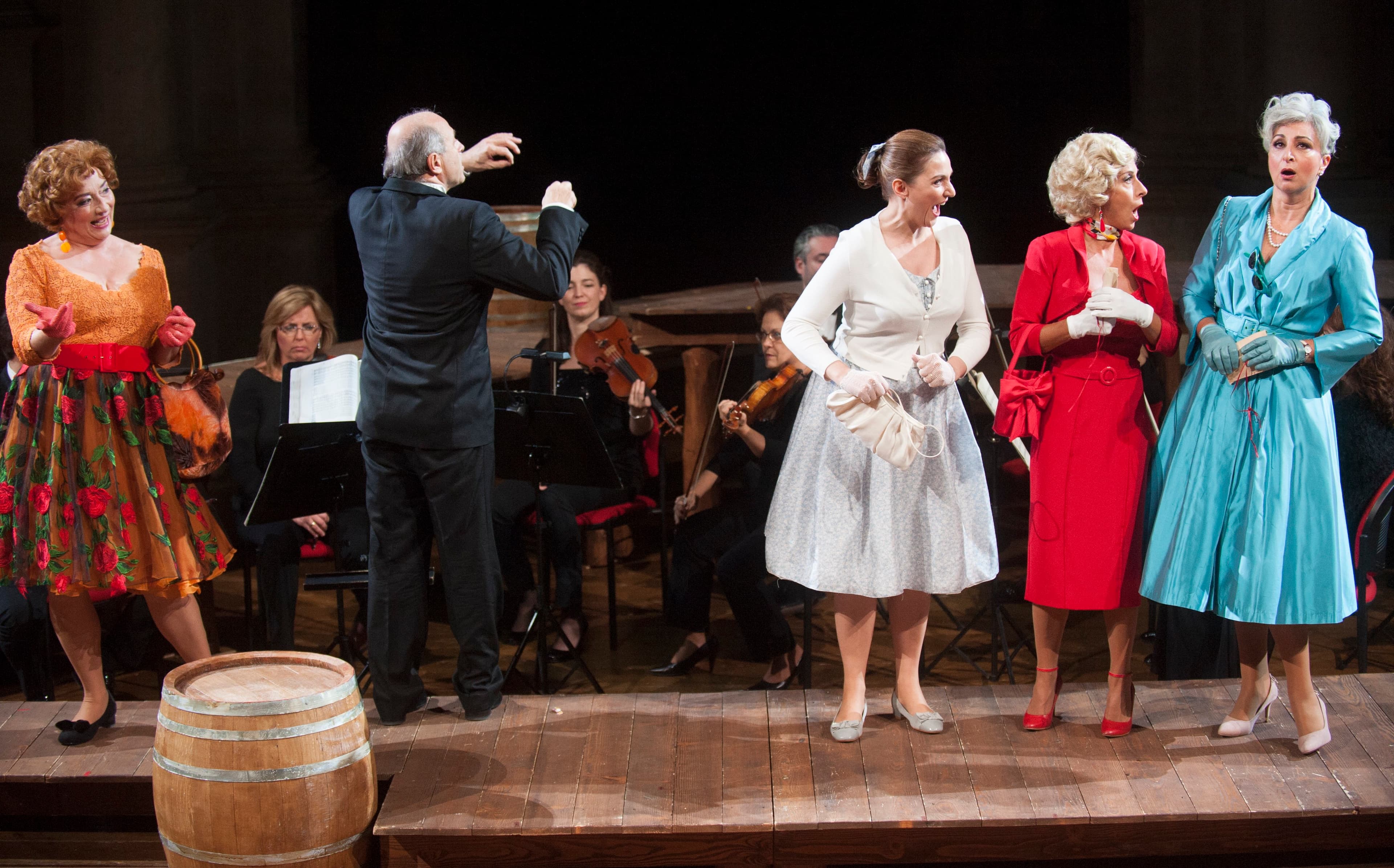
Giuseppe Verdi: Falstaff
For decades, Verdi was haunted by Rossini’s criticism that he was incapable of writing a comic opera. The barbed comment hung over Verdi like a curse, which is why, at nearly 80 years of age and with half a century’s experience as a composer and 27 operas under his belt, he set about writing the three-act comedy Falstaff. And after Otello, he was also hungry for a change of genre, saying: “I’ve ruthlessly slaughtered hordes of heroes and heroines, and now I’m ready for a bit of a laugh.”
Although Verdi feared he might not be able to complete the work, Arrigo Boito’s powers of persuasion convinced him to get started on it despite his advancing age. He liked and respected Shakespeare, keeping his volumes on his bedside table. Boito cobbled together from The Merry Wives of Windsor and both parts of Henry IV a libretto that was so singular that Verdi was unable to resist it. He composed without a deadline, with endless freedom, for his own amusement. Thus was born a completely new genre: the lyric comedy. The paunchy and comical character of Falstaff and his attempts at seduction for profit are depicted in this rich and imaginatively melodic opera with a nuanced dash of wise self-irony.